Oil, natural gas, gold, copper, agricultural commodities, and the futures markets that price them. Supply-demand dynamics, OPEC decisions, weather impacts, and geopolitical drivers — synthesised across sources.
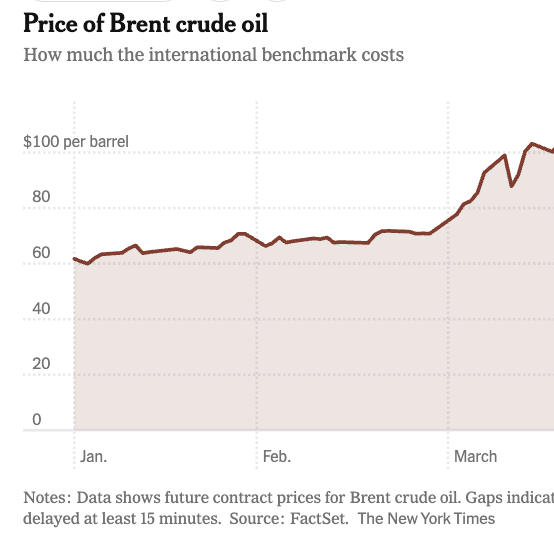
Brent crude is trading at $101.04 per barrel and WTI at $96.09, holding near recent highs after sharp gains driven by the escalating US-Iran...
Analysis
Oil-importing Asian central banks, particularly the Bank of Japan and Reserve Bank of India, face a materially harder policy path as Brent at $100 and a 40% cumulative price gain since conflict onset feed directly into headline CPI. Both institutions enter their autumn policy cycles with reduced room to cut or hold accommodatively. India's fuel subsidy bill expands mechanically; Japan's import-cost inflation complicates the BoJ's already cautious normalisation sequencing.
Argentina's threat to sanction oil companies operating near the Falklands raises material risk for any operator with exposure to the basin, given...
Operators holding Falklands exploration licences face an immediate re-pricing of political risk insurance, with no defined compliance trigger to manage against. Argentina's threat lacks a specific sanctions mechanism, meaning underwriters cannot price a discrete event risk; instead, they price a prolonged ambiguity premium. If Washington formalises a neutrality shift, U.S. secondary-sanction exposure becomes a live legal question for any company with both U.S. listing and Falklands exposure, materially narrowing the pool of financeable operators.