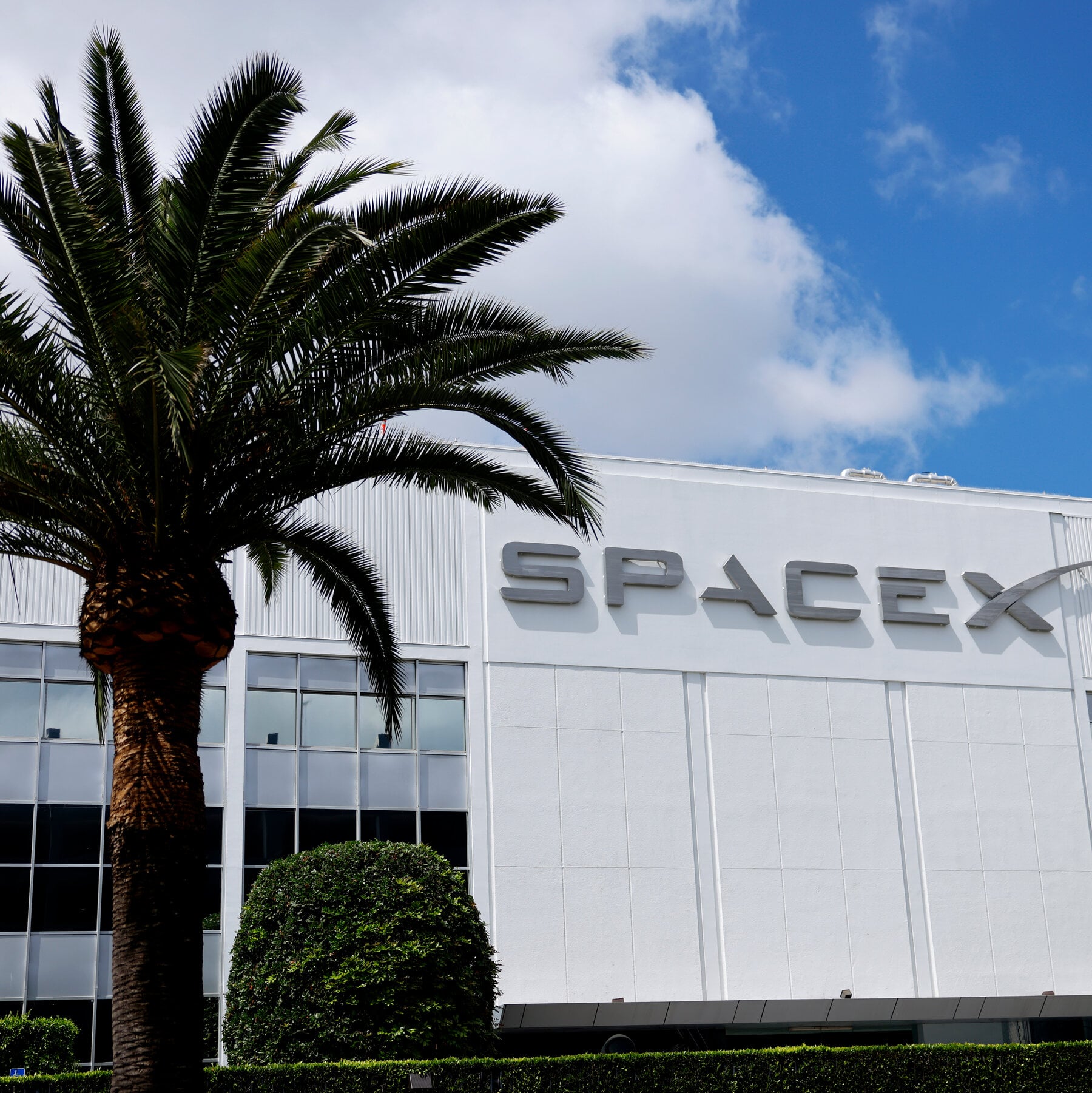
Briefing
- SpaceX's $75bn IPO eclipses Saudi Aramco's $24.9bn 2019 listing to become the largest in history, with shares priced at $135 and set to begin trading on Nasdaq on Friday under the ticker SPCX.
- The offering covers 555.6 million shares, implying a fully diluted valuation of approximately $1.78 trillion for the 24-year-old company.
- Investor demand reportedly topped $250bn against the $75bn sought, and underwriters hold an overallotment option to sell an additional 83.3 million shares, raising a further $11bn at the IPO price.
- Hyperliquid, a crypto synthetic-exposure market, is pricing SpaceX shares at $167, implying traders anticipate roughly a 24% first-day gain.
- Analysts cited by The Guardian flagged a "major disconnect" on price, raising questions about whether the valuation can be sustained given the company's outstanding engineering commitments.
- The pricing is set to make Elon Musk the world's first trillionaire, adding a personal wealth dimension that is likely to intensify regulatory and political scrutiny of the listing.
Analysis
- Without S&P 500 fast-track inclusion, SPCX's first 12 months of price discovery rests entirely on active investors, and the $13.4bn passive inflow floor is absent. Hyperliquid's 24% first-day premium implies synthetic-market participants are pricing a gap-up that active book demand must then sustain without index-forced buying. If the 24% open-day surge materialises and fades, the stock risks a sharp mean-reversion as the pre-IPO investor base, holding 78% of the raise, faces no forced-buyer support beneath them.
- SpaceX's $75bn raise at a $1.78 trillion valuation sets the de facto ceiling for the 2026 AI IPO cohort. Anthropic, filing confidentially at $965bn, and OpenAI now face institutional allocators who must weigh whether balance-sheet capacity exists to absorb three mega-listings in a single year. With Alphabet's $85bn secondary already placed and Oracle shedding 8% post-earnings despite a beat, risk appetite for large-cap tech issuance is not unlimited, and Anthropic's book-build is the most exposed given its undisclosed revenue base.
- Musk becoming the world's first trillionaire via a public listing concentrates regulatory and political scrutiny on both SpaceX and his other assets simultaneously. Powell's warning that political interference in the Fed risks permanent trust destruction, combined with the Trump administration exploring government equity stakes in AI companies, creates a scenario where SPCX becomes a political flashpoint, potentially triggering congressional hearings or DOD contract reviews that introduce non-commercial risk into the stock's valuation framework.
Historical Context
- Nov 2021
Rivian's IPO briefly reached a $150bn valuation before losing more than 80% of its value within 18 months as production missed targets and passive index inclusion was delayed. The parallel: a high-profile EV listing with outstanding engineering delivery risk and no S&P 500 fast-track entry, same structural setup as SPCX.
- Nov 2019
Saudi Aramco's $24.9bn IPO, the prior record, saw shares rise roughly 10% on debut before stalling as domestic investor support faded and international institutions reduced exposure. The prior record is now eclipsed 3x by SpaceX, making historical IPO aftermarket patterns a weaker guide for SPCX price behaviour.
- Sep 2014
Alibaba's $25bn IPO, then the largest ever, saw a 38% first-day gain that proved unsustainable; shares retraced to near IPO price within eight months as regulatory and earnings risks materialised. The pattern of synthetic and pre-market pricing implying outsized first-day gains followed by active-investor-driven reversion is directly relevant to SPCX.
Connected Events

S&P 500 rejects fast-track entry for SpaceX, delaying $14bn in passive inflows
The S&P 500's rejection of fast-track index entry for SpaceX removes the $13.4bn passive inflow floor that would have supported SPCX post-listing, leaving price discovery entirely to active investors during the most volatile initial trading period.

Alphabet upsizes equity raise to $85bn, largest secondary share sale on record
Alphabet's record $85bn secondary offering, already placed in the same capital-raise window, absorbs institutional balance sheet capacity that would otherwise be available for SPCX and Anthropic's upcoming listings, compressing achievable demand for the remainder of the 2026 mega-IPO cohort.

Anthropic files confidentially for US IPO after raising at $965bn valuation
Anthropic's confidential IPO filing at a $965bn valuation now sits in the queue behind a $75bn SpaceX raise, facing the same S&P 500 exclusion rule and an institutional investor base that must price two near-trillion-dollar listings with limited passive buying support.
Further reading


See Indexa more often on Google
Mark Indexa as a preferred source — your Top Stories will surface more Indexa coverage.